Summary
Bible verse about jesus birth
Bible verse about jesus birth
The Living Word: A Journey Through the Birth of our Savior
Part I: Bible Verses Focused on the Birth of Jesus
From ancient prophecies to the humble manger and the theological significance of the Word made flesh.
The Prophetic Promises
-
Isaiah 7:14 – “Therefore the Lord himself will give you a sign: The virgin will conceive and give birth to a son, and will call him Immanuel.”
-
Isaiah 9:6 – “For to us a child is born, to us a son is given, and the government will be on his shoulders. And he will be called Wonderful Counselor, Mighty God, Everlasting Father, Prince of Peace.”
-
Micah 5:2 – “But you, Bethlehem Ephrathah, though you are small among the clans of Judah, out of you will come for me one who will be ruler over Israel, whose origins are from of old, from ancient times.”
-
Numbers 24:17 – “I see him, but not now; I behold him, but not near. A star will come out of Jacob; a scepter will rise out of Israel.”
-
Genesis 3:15 – “And I will put enmity between you and the woman, and between your offspring and hers; he will crush your head, and you will strike his heel.”
-
Jeremiah 23:5 – “The days are coming, declares the Lord, when I will raise up for David a righteous Branch, a King who will reign wisely and do what is just and right in the land.”
-
Isaiah 11:1 – “A shoot will come up from the stump of Jesse; from his roots a Branch will bear fruit.”
-
Psalm 72:10 – “May the kings of Tarshish and of distant shores bring tribute to him; may the kings of Sheba and Seba present him gifts.”
-
Hosea 11:1 – “When Israel was a child, I loved him, and out of Egypt I called my son.”
-
Isaiah 60:3 – “Nations will come to your light, and kings to the brightness of your dawn.”
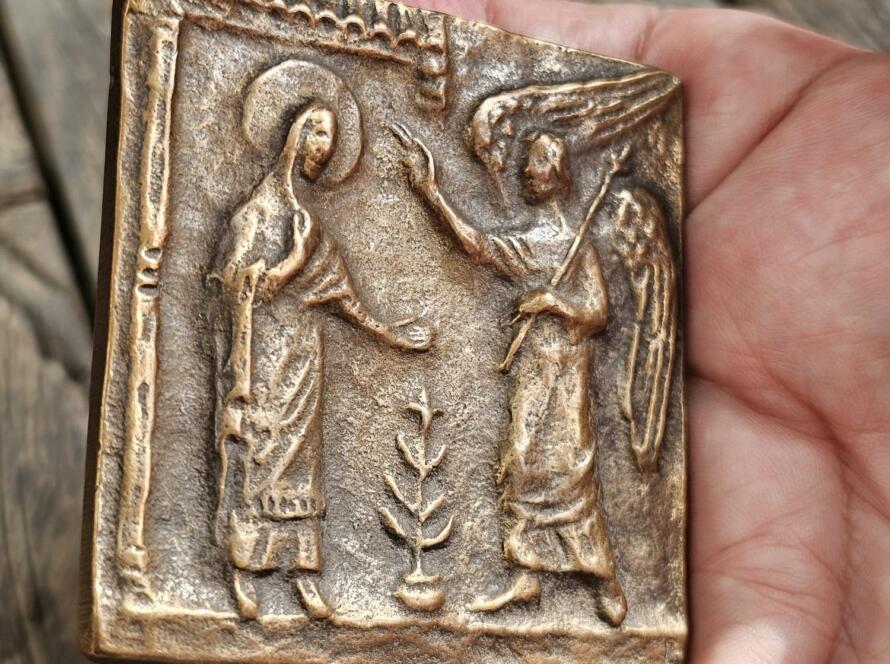
The Annunciation and Conception
-
Luke 1:26-27 – “God sent the angel Gabriel to Nazareth… to a virgin pledged to be married to a man named Joseph.”
-
Luke 1:30 – “But the angel said to her, ‘Do not be afraid, Mary; you have found favor with God.'”
-
Luke 1:31 – “You will conceive and give birth to a son, and you are to call him Jesus.”
-
Luke 1:32 – “He will be great and will be called the Son of the Most High.”
-
Luke 1:34 – “How will this be, Mary asked the angel, since I am a virgin?”
-
Luke 1:35 – “The Holy Spirit will come on you, and the power of the Most High will overshadow you.”
-
Luke 1:37 – “For no word from God will ever fail.”
-
Luke 1:38 – “I am the Lord’s servant, Mary answered. May your word to me be fulfilled.”
-
Matthew 1:18 – “This is how the birth of Jesus the Messiah came about: His mother Mary was pledged to be married to Joseph…”
-
Matthew 1:20 – “An angel of the Lord appeared to him in a dream and said, ‘Joseph son of David, do not be afraid to take Mary home as your wife…'”
-
Matthew 1:21 – “She will give birth to a son, and you are to give him the name Jesus, because he will save his people from their sins.”
-
Matthew 1:23 – “The virgin will conceive and give birth to a son, and they will call him Immanuel (which means ‘God with us’).”
The Birth in Bethlehem
-
Luke 2:1 – “In those days Caesar Augustus issued a decree that a census should be taken…”
-
Luke 2:4 – “So Joseph also went up from the town of Nazareth in Galilee to Judea, to Bethlehem the town of David.”
-
Luke 2:5 – “He went there to register with Mary, who was pledged to be married to him and was expecting a child.”
-
Luke 2:6 – “While they were there, the time came for the baby to be born.”
-
Luke 2:7 – “And she gave birth to her firstborn, a son. She wrapped him in cloths and placed him in a manger, because there was no guest room available for them.”
-
Matthew 2:1 – “After Jesus was born in Bethlehem in Judea, during the time of King Herod, Magi from the east came to Jerusalem.”
The Shepherds and Angels
-
Luke 2:8 – “And there were shepherds living out in the fields nearby, keeping watch over their flocks at night.”
-
Luke 2:9 – “An angel of the Lord appeared to them, and the glory of the Lord shone around them, and they were terrified.”
-
Luke 2:10 – “But the angel said to them, ‘Do not be afraid. I bring you good news that will cause great joy for all the people.'”
-
Luke 2:11 – “Today in the town of David a Savior has been born to you; he is the Messiah, the Lord.”
-
Luke 2:12 – “This will be a sign to you: You will find a baby wrapped in cloths and lying in a manger.”
-
Luke 2:13 – “Suddenly a great company of the heavenly host appeared with the angel, praising God.”
-
Luke 2:14 – “Glory to God in the highest heaven, and on earth peace to those on whom his favor rests.”
-
Luke 2:15 – “The shepherds said to one another, ‘Let’s go to Bethlehem and see this thing that has happened…'”
-
Luke 2:16 – “So they hurried off and found Mary and Joseph, and the baby, who was lying in the manger.”
-
Luke 2:17 – “When they had seen him, they spread the word concerning what had been told them about this child.”
-
Luke 2:20 – “The shepherds returned, glorifying and praising God for all the things they had heard and seen.”
The Magi and the Star
-
Matthew 2:2 – “Where is the one who has been born king of the Jews? We saw his star when it rose and have come to worship him.”
-
Matthew 2:9 – “The star they had seen when it rose went ahead of them until it stopped over the place where the child was.”
-
Matthew 2:10 – “When they saw the star, they were overjoyed.”
-
Matthew 2:11 – “On coming to the house, they saw the child with his mother Mary, and they bowed down and worshiped him.”
-
Matthew 2:11 (cont.) – “Then they opened their treasures and presented him with gifts of gold, frankincense and myrrh.”
The Theological Mystery (The Word Made Flesh)
-
John 1:1 – “In the beginning was the Word, and the Word was with God, and the Word was God.”
-
John 1:9 – “The true light that gives light to everyone was coming into the world.”
-
John 1:10 – “He was in the world, and though the world was made through him, the world did not recognize him.”
-
John 1:11 – “He came to that which was his own, but his own did not receive him.”
-
John 1:14 – “The Word became flesh and made his dwelling among us. We have seen his glory, the glory of the one and only Son, who came from the Father, full of grace and truth.”
-
John 3:16 – “For God so loved the world that he gave his one and only Son…”
-
John 3:17 – “For God did not send his Son into the world to condemn the world, but to save the world through him.”
-
Galatians 4:4 – “But when the set time had fully come, God sent his Son, born of a woman, born under the law.”
-
Galatians 4:5 – “…to redeem those under the law, that we might receive adoption to sonship.”
-
Philippians 2:6 – “Who, being in very nature God, did not consider equality with God something to be used to his own advantage.”
-
Philippians 2:7 – “Rather, he made himself nothing by taking the very nature of a servant, being made in human likeness.”
-
Philippians 2:8 – “And being found in appearance as a man, he humbled himself by becoming obedient to death—even death on a cross!”
-
1 Timothy 3:16 – “He appeared in the flesh, was vindicated by the Spirit, was seen by angels, was preached among the nations, was believed on in the world, was taken up in glory.”
-
Hebrews 1:3 – “The Son is the radiance of God’s glory and the exact representation of his being.”
-
Hebrews 2:14 – “Since the children have flesh and blood, he too shared in their humanity so that by his death he might break the power of him who holds the power of death.”
-
1 John 4:9 – “This is how God showed his love among us: He sent his one and only Son into the world that we might live through him.”
-
1 John 4:10 – “This is love: not that we loved God, but that he loved us and sent his Son as an atoning sacrifice for our sins.”
-
Colossians 1:15 – “The Son is the image of the invisible God, the firstborn over all creation.”
-
Colossians 1:19 – “For God was pleased to have all his fullness dwell in him.”
-
2 Corinthians 8:9 – “For you know the grace of our Lord Jesus Christ, that though he was rich, yet for your sake he became poor, so that you through his poverty might become rich.”
Praise and Fulfillment
-
Luke 1:46 – “And Mary said: ‘My soul glorifies the Lord…'”
-
Luke 1:68 – “Praise be to the Lord, the God of Israel, because he has come to his people and redeemed them.”
-
Luke 2:30 – “For my eyes have seen your salvation.”
-
Luke 2:32 – “A light for revelation to the Gentiles, and the glory of your people Israel.”
-
Revelation 12:5 – “She gave birth to a son, a male child, who ‘will rule all the nations with an iron scepter.'”
-
Revelation 22:16 – “I, Jesus, have sent my angel to give you this testimony for the churches. I am the Root and the Offspring of David, and the bright Morning Star.”
Part II: Questions and Answers for the Modern Believer
Derived from common discussions in leading Christian forums regarding the Nativity.
-
Why was Jesus born in a manger? It symbolized His humility and accessibility to all, from the lowest shepherds to the highest kings.
-
Was Jesus actually born on December 25th? The Bible doesn’t specify a date; the date was chosen later by the Church to celebrate the Incarnation.
-
What is the significance of the “Virgin Birth”? It fulfills prophecy (Isaiah 7:14) and ensures Jesus was born without the stain of inherited sin.
-
Who were the Magi? Likely Zoroastrian priests or astronomers from Persia who recognized the King of the Jews through celestial signs.
-
How many Magi were there? The Bible mentions three gifts (gold, frankincense, myrrh), but the actual number of Magi is unknown.
-
Why did Herod want to kill Jesus? He feared a political rival to his throne.
-
What does “Immanuel” mean? “God with us”—affirming Jesus’ divinity and presence.
-
Why did the angels appear to shepherds first? Shepherds were often marginalized; God showed that the Gospel is for everyone.
-
Is the “Star of Bethlehem” a natural phenomenon? Some believe it was a conjunction of planets, while others see it as a supernatural light.
-
Why are there two different genealogies for Jesus? Matthew likely traces Joseph’s legal line, while Luke traces Mary’s physical lineage.
-
Did Mary have other children after Jesus? Most Protestants believe she did (James, Jude, etc.), while Catholics believe she remained a perpetual virgin.
-
Why Bethlehem? To fulfill the prophecy of Micah 5:2 and link Jesus to the house of David.
-
What is “The Incarnation”? The doctrine that the second person of the Trinity took on human flesh.
-
Why did the Magi bring Gold? It represents His kingship.
-
Why Frankincense? It represents His deity and role as High Priest.
-
Why Myrrh? It foreshadows His suffering and death (used for embalming).
-
What was the “Gloria in Excelsis”? The song of the angels (Luke 2:14).
-
How old was Mary? Tradition suggests she was a young teenager, which was common for marriage in that era.
-
What was Joseph’s role? He provided legal lineage, protection, and a godly upbringing.
-
Why did they flee to Egypt? To escape Herod’s “Massacre of the Innocents.”
-
How does Jesus’ birth prove He is God? Through the fulfillment of specific, ancient prophecies and the nature of the miraculous conception.
-
What does “The Word became flesh” mean? That the eternal logic/wisdom of God became a person.
-
Why did God choose a poor family? To show that His kingdom is not based on worldly wealth.
-
Did the Wise Men visit the stable? Most scholars believe they arrived months later at a “house” (Matthew 2:11).
-
How does the birth relate to the Cross? He was born to die; the manger is the first step toward the atonement.
-
What is the “Annunciation”? The angel Gabriel’s announcement to Mary.
-
Why is Jesus called the “Son of David”? Because He is the rightful heir to David’s eternal throne.
-
What can we learn from Mary’s response (“Let it be to me”)? Total submission to God’s will despite the cost.
-
What can we learn from Joseph’s response? Obedience and integrity in difficult social situations.
-
Is Christmas a pagan holiday? While some customs have various origins, the core celebration is the biblical truth of Christ’s birth.
-
Why did God use a star? To show His sovereignty over all creation, including the heavens.
-
What does “Jesus” mean? “The Lord saves.”
-
Why “Messiah” and “Christ”? Both mean “Anointed One.”
-
How long was the journey from Nazareth to Bethlehem? Roughly 70-90 miles, a 4-5 day journey.
-
Why was there “no room in the inn”? Likely due to the census crowds; “inn” could also mean a guest room in a relative’s house.
-
What is the Magnificat? Mary’s song of praise (Luke 1:46-55).
-
How does the birth of Jesus bring “Peace on Earth”? It provides reconciliation between God and man.
-
Did the angels sing or speak? The Bible says they “said” and “praised,” but we often envision it as singing.
-
Why is the birth in Luke more detailed? Luke was a physician and historian who likely interviewed Mary.
-
Why is the birth in Matthew focused on Joseph? Matthew wrote for a Jewish audience, emphasizing the legal/kingly line.
-
What is the “Census of Quirinius”? A historical marker used by Luke to date the birth.
-
Why do we call it “The Nativity”? From the Latin nativitas, meaning birth.
-
What is the significance of the “cloths” (swaddling)? It was standard care, but also pointed to His humanity.
-
Why is Jesus the “Prince of Peace”? Because His reign brings internal and external wholeness.
-
What is “The Jesse Tree”? A visual representation of Jesus’ ancestry.
-
Why did Jesus come at that specific time in history? (Galatians 4:4) The “fullness of time”—Roman roads and a common language (Greek) helped the Gospel spread.
-
What is the “Hypostatic Union”? The theological term for Jesus being 100% God and 100% man.
-
Did the Magi follow the star for two years? Herod’s order to kill boys under two suggests a significant time elapsed.
-
What happened to the gold the Magi gave? Many believe it funded the family’s flight to Egypt.
-
How does the birth encourage us in trials? It shows God enters into our mess and pain.
-
Why is the genealogy in Matthew divided into three sets of 14? It’s a mnemonic device and highlights the Davidic connection (numeric value of “David” is 14).
-
What is “The Visitation”? Mary’s visit to Elizabeth.
-
Why did John the Baptist leap in the womb? He recognized the presence of the Savior even before birth.
-
What does the birth say about children? It sanctifies childhood and shows every life is precious.
-
Is the birth story a myth? No, it is anchored in historical figures (Herod, Augustus, Quirinius).
-
Why did Jesus have to be born of a woman? To be a true human representative for mankind.
-
Why “King of the Jews”? To show He is the fulfillment of Israel’s hope.
-
How does the birth challenge our pride? The King of Kings was born in a stable.
-
What is “Advent”? A season of waiting and preparation for Christ’s coming.
-
Why did Zechariah lose his voice? Because of his unbelief regarding the birth of John the Baptist.
-
What is the “Benedictus”? Zechariah’s song of prophecy.
-
How does the birth address our loneliness? It proves God is “with us” (Immanuel).
-
What does the “swaddling” remind us of? His eventual burial cloths, showing His birth was for His death.
-
Why did God use dreams to speak to Joseph? To provide direct guidance in a culturally sensitive situation.
-
Was Mary sinless? Protestants believe she was a sinner saved by grace; Catholics believe in her Immaculate Conception.
-
What is the main message of the birth? Grace. God initiated the rescue of humanity.
-
How does the birth impact our view of the body? It shows the physical body is good and can be a temple of God.
-
Why is Jesus called the “Last Adam”? He succeeded where the first Adam failed.
-
How did the Magi know what the star meant? Likely from the influence of Daniel’s prophecies in Babylon/Persia.
-
What is the “Day of Epiphany”? The celebration of the Magi’s visit (revelation to the Gentiles).
-
Can we worship Jesus as a baby? We worship the person of Jesus, who is the eternal King, regardless of His age in the narrative.
-
How does the birth of Jesus affect our work? He dignified human labor by becoming a carpenter’s son.
-
Why the title “Mighty God”? It confirms the child’s nature is divine.
-
What is “The Great Exchange”? He took our poverty to give us His riches (2 Cor 8:9).
-
How does the birth give us hope for the future? If He came once, He will surely come again.
-
Why is Mary called “Theotokos”? Greek for “God-bearer”—to protect the truth of Jesus’ divinity.
-
What is the significance of “Nazareth”? A humble place, showing God uses the overlooked.
-
How should we celebrate the birth? With joy, worship, and acts of charity.
-
Is the birth story relevant for non-Christians? Yes, it’s the turning point of global history and ethics.
-
How can I explain the birth to my children? Focus on God’s big gift of love and the “Good News.”
Part III: Practical Tips for Daily Living
Applying the lessons of the Nativity to Work, Studies, Social Life, and Family.
At Work (Professional Integrity)
-
Practice Humility: Just as Jesus entered in a manger, don’t seek the highest seat; let your work speak for you.
-
Accept “No Room”: When a project or idea is rejected, remember Jesus wasn’t always welcomed. Stay resilient.
-
Be a “Star”: Guide others to what is right and true in the office.
-
Offer Your “Gold”: Bring your best skills and excellence to your tasks.
-
Incarnational Presence: Don’t just email; show up for your colleagues.
-
Serve Others: Use your position to help those “lower” on the ladder.
-
Patience in “Advent”: Wait for the right time for a promotion or change.
-
Follow the Light: Let ethical principles guide your business decisions.
-
Quiet Obedience: Like Joseph, do the right thing even when it’s hard.
-
Acknowledge the Source: Credit God for your successes.
-
Dignity in Labor: Whatever your job, do it as if for the Lord.
-
Peace-Making: Resolve conflicts quickly; be the “Prince of Peace” in the breakroom.
-
Simple Living: Don’t be consumed by corporate greed; Jesus was born poor.
-
Watchfulness: Be alert for opportunities to bless coworkers.
-
Integrity in Hidden Tasks: Like the shepherds in the field, be faithful when no one is watching.
-
Wisdom from Afar: Seek advice from mentors (your own “Wise Men”).
-
Refugee Empathy: Support colleagues who are immigrants or outsiders.
-
Avoid Herod-like Jealousy: Celebrate others’ promotions.
-
Clear Communication: Speak truth with the clarity of Gabriel.
-
Rest: Even the holy family needed rest; don’t burn out.
-
Faithful Stewardship: Manage company resources with care.
-
Adaptability: Mary and Joseph had to travel; stay flexible with work travel/changes.
-
Vision: Keep the “big picture” (the Kingdom) in mind.
-
Encouragement: Be the one who brings “tidings of great joy” to a stressed team.
-
Sacrifice: Be willing to put the team’s needs above your own.
In Studies (Lifelong Learning)
-
Seek Wisdom: Like the Magi, pursue truth across borders.
-
Stay Curious: Always ask “Where is the King?” in your subject matter.
-
Be Teachable: Have the heart of the “Lord’s servant” (Mary).
-
Persistence: The Magi traveled for months; don’t give up on hard subjects.
-
Focus on the Light: Don’t get distracted by “Herods” (negativity/distractions).
-
Study the Word: Let the Bible be the foundation of your knowledge.
-
Use Your Gifts: Use your education as a “gift” back to God.
-
Connect the Dots: See how God’s truth integrates into science, history, and art.
-
Find a Mentor: Find your “Gabriel” to give you direction.
-
Balance: Study hard, but don’t forget to worship.
-
Value Process: Growth takes time (9 months of waiting).
-
Simplicity: Don’t overcomplicate your faith with academic pride.
-
Share Your Learning: Like the shepherds, tell others what you’ve found.
-
Humble Beginnings: Every expert was once a beginner (a “baby”).
-
Resilience: If you fail a test, remember Bethlehem was “small” but chosen.
-
Integrity in Research: Don’t cut corners.
-
Community Learning: Study with others; don’t be a lone traveler.
-
Apply Knowledge: Wisdom is knowledge applied (the Magi followed the star).
-
Awe and Wonder: Never lose your sense of wonder at creation.
-
Ethical Learning: Use your degrees to serve, not exploit.
-
Time Management: “When the set time had fully come…” prioritize your tasks.
-
Gratitude for Teachers: Honor those who guide you.
-
Holistic Study: Care for your body/spirit as well as your mind.
-
Faith Over Fear: Don’t let exam anxiety overwhelm you; “Fear not!”
-
Aim for Excellence: Do your assignments for the “King of Kings.”
In Social Life (Friendships and Community)
-
Inclusive Love: Welcome the “shepherds” and the “Magi” in your circle.
-
Hospitality: Make “room in the inn” of your heart for new friends.
-
Loyalty: Be like Joseph—stand by your friends in their difficult times.
-
Celebrate Diversity: The Nativity brought together different classes and nations.
-
Vulnerability: Be real about your needs, just as Jesus became a vulnerable baby.
-
Speak Life: Use your words to bring “Great Joy.”
-
Practice Forgiveness: Jesus came to save us from sin; extend that grace to others.
-
Avoid Gossip: Protect reputations as Joseph protected Mary.
-
Listen Well: Hear the “angels” in your life (messengers of truth).
-
Be Generous: Give your time and resources (gold, frankincense, myrrh).
-
Authenticity: Be who God made you to be, not what society expects.
-
Social Justice: Advocate for the “Marys” and “Josephs” of today.
-
True Peace: Be a bridge-builder in polarized groups.
-
Shared Worship: Go to church with friends.
-
Long-term Thinking: Build friendships that last, like the eternal Kingdom.
-
Discernment: Be careful of “Herods” who try to manipulate you.
-
Joyful Presence: Let your presence be a “Light in the Darkness.”
-
Encourage Potential: See the “King” in others, even if they are in a “manger.”
-
Commitment: Stick with your community through thick and thin.
-
Humor and Joy: Celebrate life! The angels rejoiced.
-
Boundaries: It’s okay to withdraw to “Egypt” (safety) if a relationship is toxic.
-
Equality: Treat everyone with the same respect.
-
Gratitude: Tell your friends you appreciate them.
-
Empathy: Walk in others’ shoes.
-
Service Projects: Do good things for your city as a group.
In Family Life (Home and Relationships)
-
Prioritize Your Spouse: Joseph and Mary faced the world together.
-
Protect Your Children: Be alert to their needs and safety.
-
Teach the Word: Ensure your home is built on Scripture.
-
Simple Traditions: You don’t need wealth to have a holy home.
-
Affirmation: Tell your kids they are “favored” by God.
-
Model Obedience: Show your children what following God looks like.
-
Pray Together: Make your home a house of prayer.
-
Practice Patience: Raising a family is a long journey to “Bethlehem.”
-
Honor Parents: As Jesus honored His earthly and Heavenly parents.
-
Unconditional Love: Love your family even when they are “messy.”
-
Conflict Resolution: “Don’t let the sun go down on your anger.”
-
Support Dreams: Encourage your family’s God-given callings.
-
Create a Sanctuary: Let your home be a place of “Peace on Earth.”
-
Generosity at Home: Be generous with your time and affection.
-
Mealtime Fellowship: Share meals and stories.
-
Spiritual Growth: Grow together; don’t leave anyone behind.
-
Endurance: When times are hard, trust God is “with us.”
-
Celebration: Celebrate milestones with meaning.
-
Forgive Quickly: Don’t hold onto family grudges.
-
Legacy: Think about the faith you are passing to the next generation.
-
Shared Mission: Serve others as a family unit.
-
Humility: Apologize to your children when you are wrong.
-
Awe of Life: Value every member, from the oldest to the newest baby.
-
Trust God’s Plan: Even when you don’t understand the “census” or the “travel.”
-
Focus on Jesus: Keep Christ at the center of your home every day.
Part IV: Enhancing Life through the Savior
Wisdom for Livelihood, Marriage, and Parenting.
Life and Livelihood (Providence)
Jesus’ birth teaches us that God provides. He provided a star for the Magi, a message for the shepherds, and a way for Joseph. To improve your livelihood:
-
Trust the Timing: Just as Jesus came in the “fullness of time,” your breakthrough has a divine schedule.
-
Work with Excellence: Jesus, the Word, became flesh. This means our physical work matters. Bring “Heavenly quality” to “Earthly tasks.”
Marriage (Covenant)
The relationship between Mary and Joseph is a masterclass in trust and support.
-
Mutual Respect: Joseph respected Mary’s calling; Mary trusted Joseph’s leadership.
-
Overcoming Scandal: They faced social pressure together. In marriage, be a “united front” against the world’s criticisms.
Parenting (Stewarding Souls)
-
Sacred Stewardship: You don’t “own” your children; you steward them for God.
-
Lead by Example: Before the shepherds saw the baby, they heard the angels. Let your children hear your praise before they see your rules.