Summary
What Is the Meaning of the Jerusalem Cross?
What Is the Meaning of the Jerusalem Cross?
⭐ Introduction: A Cross Born in the Heart of Christianity
The Jerusalem Cross, also known as the “Crusader’s Cross” or the “Five-Fold Cross,” is one of the most iconic and ancient symbols of the Christian faith. Found throughout the Holy Land—engraved on churches, carved into olive wood, stamped on tombs, and worn by believers—it symbolizes the message of Christ, the spread of the Gospel, and the spiritual heart of Jerusalem.
But what does it actually mean?
Where did it come from?
And why is it still so popular today?
This guide explains the Jerusalem Cross in a clear and inspiring way—its history, symbolism, biblical meaning, and its relevance for Christians in 2025.
⭐ 1. What Is the Jerusalem Cross?
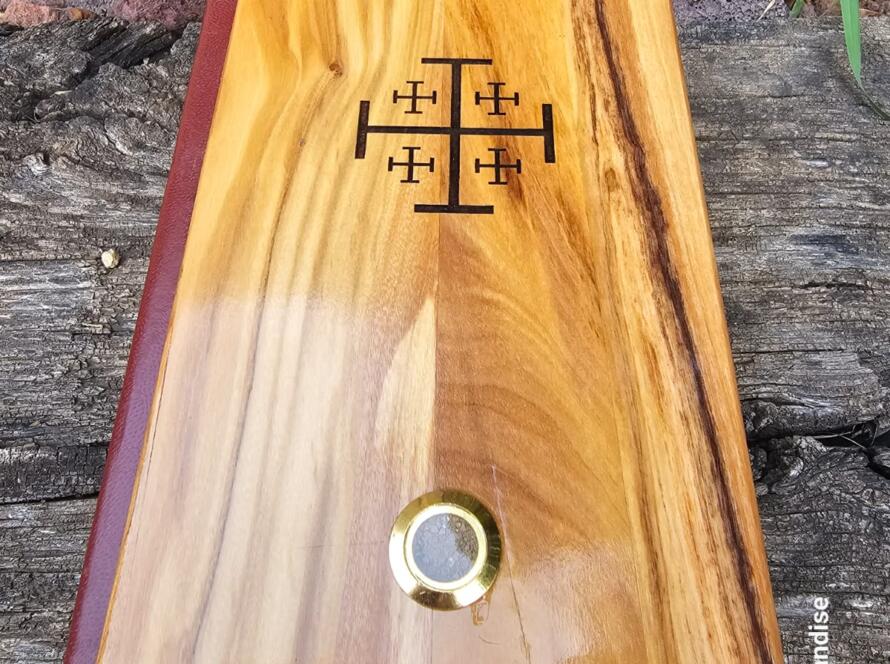
The Jerusalem Cross consists of one large central cross surrounded by four smaller crosses, one in each quadrant.
This unique design makes it instantly recognizable and rich with layered symbolism.
Other names include:
-
The Crusader Cross
-
The Five-Fold Cross
-
The Jerusalem Symbol
-
Cross of the Holy Land
Its meaning goes far beyond one interpretation—the symbol carries deep theological, historical, and missionary significance.
⭐ 2. The Origins of the Jerusalem Cross
2.1 Early Christian Roots
While the symbol rose to prominence during the medieval period, many historians believe its elements existed earlier in Eastern Christian art. The combination of crosses symbolized the unity of the Gospel message amid the growing global Church.
2.2 The Crusader Era (11th–13th Century)
The Jerusalem Cross became widely associated with the Kingdom of Jerusalem after the First Crusade (1099 CE). It appeared:
-
On royal garments
-
On flags and shields
-
In seals and documents
-
On church decorations
It represented Christian sovereignty, pilgrimage, and the holy mission to protect and spread the Gospel.
2.3 Adoption in Christian Tradition Worldwide
Despite its crusader association, Christians across all denominations—including Catholics, Orthodox, Lutherans, Anglicans, and Evangelicals—embrace the Jerusalem Cross today as a universal symbol of faith, unity, and the message of salvation flowing from Jerusalem.
⭐ 3. The Symbolism of the Jerusalem Cross
The Jerusalem Cross carries multiple layers of meaning, each one deepening its significance. Here are the most commonly recognized interpretations:
3.1 The Five Wounds of Christ
The most traditional interpretation:
-
The large central cross → Christ
-
The four smaller crosses → His wounds from the nails and spear
Together they represent Jesus’ sacrificial love and the Passion.
3.2 Jerusalem as the Spiritual Center of the World
Jerusalem is described in the Bible as the meeting place between:
-
God and humanity
-
Heaven and earth
-
The Old Covenant and the New
The central cross represents Jerusalem itself, while the four smaller crosses symbolize the four directions of the world.
3.3 The Mission to Spread the Gospel to the Four Corners of the Earth
A powerful missionary meaning:
-
Large cross → Christ
-
Four smaller crosses → The Gospel traveling outward into:
-
North
-
South
-
East
-
West
-
This interpretation reflects Matthew 28:19:
“Go therefore and make disciples of all nations.”
3.4 Unity of the Five Books of the Bible
In some traditions, the five crosses represent:
-
The Torah (Pentateuch)
-
The Prophets
-
The Writings
-
The Gospels
-
The Apostolic Writings
A symbol of Scripture’s wholeness.
3.5 Christ as the Center of All Creation
The Jerusalem Cross visually reinforces the belief that Jesus is the center point of:
-
Salvation
-
History
-
Creation
-
Christian faith
Each smaller cross circles back to the central cross, showing that all things return to Him.
⭐ 4. Why the Jerusalem Cross Is So Popular Today
4.1 A Symbol of Faith Rooted in the Holy Land
Wearing or displaying the Jerusalem Cross connects believers to:
-
The city of Jesus’ death and resurrection
-
The early Church
-
The Apostles’ teachings
-
Christian pilgrimage
It is, in many ways, the ultimate Christian heritage symbol.
4.2 A Message of Peace & Unity
In a divided world, the Jerusalem Cross has become a sign of:
-
Hope
-
Reconciliation
-
Brotherhood among Christians
-
Unity across denominations
Its shape brings together multiple crosses into one coherent symbol—reflecting unity in diversity.
4.3 Connection to Pilgrimage & Blessing
Pilgrims to Jerusalem often choose the Jerusalem Cross as:
-
A souvenir
-
A spiritual reminder
-
A symbol of blessing
-
A sign of their journey of faith
Many Holy Land artisans carve it into olive wood, giving it even deeper biblical meaning.
4.4 Perfect for Jewelry, Crosses & Prayer Items
The Jerusalem Cross appears in:
-
Necklaces
-
Olive-wood crosses
-
Rosaries
-
Wall art
-
Bracelets
-
Home décor
Its symmetrical structure makes it visually beautiful and spiritually powerful.
⭐ 5. The Jerusalem Cross in Scripture
While the symbol itself does not appear directly in the Bible, its meaning draws heavily from Scripture:
Matthew 28:19
“Go and make disciples of all nations.”
→ Symbolized by the four smaller crosses spreading outward.
Acts 1:8
“You will be my witnesses in Jerusalem, Judea, Samaria, and to the ends of the earth.”
→ Jerusalem at the center; the world radiating from it.
John 19:34
Christ’s wounds — the foundation of salvation.
→ Represented by the five crosses.
Psalm 87:2–3
“The Lord loves the gates of Zion.”
→ Jerusalem as the heart of God’s plan.
⭐ 6. Common Questions (FAQ)
1. Is the Jerusalem Cross Catholic or Orthodox?
Both—and more.
It is used by Catholics, Orthodox, Anglicans, Lutherans, and Evangelicals.
2. Is the Jerusalem Cross related to the Crusades?
Historically yes, but today it is embraced far beyond the Crusader period and holds spiritual meaning unrelated to war.
3. Why does it have four smaller crosses?
To symbolize the spread of the Gospel, the five wounds of Christ, or the universality of Christianity.
4. Is it okay to wear the Jerusalem Cross as jewelry?
Absolutely. It is a beautiful and meaningful expression of Christian faith.
5. Are olive-wood Jerusalem Crosses special?
Yes—olive wood symbolizes peace and is native to the land of the Bible, making such crosses deeply meaningful.
⭐ 7. The Jerusalem Cross as a Modern Christian Symbol
In today’s world, the Jerusalem Cross represents:
-
Faith rooted in ancient tradition
-
Unity of Christians worldwide
-
Love and sacrifice of Christ
-
Peace flowing from Jerusalem
-
Hope for believers everywhere
It stands as a timeless reminder that Christianity is global, historical, and centered on the message of Jesus.
⭐ Conclusion
The Jerusalem Cross is one of the richest symbols in Christian tradition—full of history, theology, beauty, and spiritual depth. Its design reflects the heart of the Gospel: Christ at the center, radiating love, salvation, and hope to the ends of the earth.
Whether carved in olive wood, worn as a pendant, held during prayer, or displayed at home, the Jerusalem Cross remains a powerful reminder of the faith that began in the Holy City and continues to transform lives worldwide.